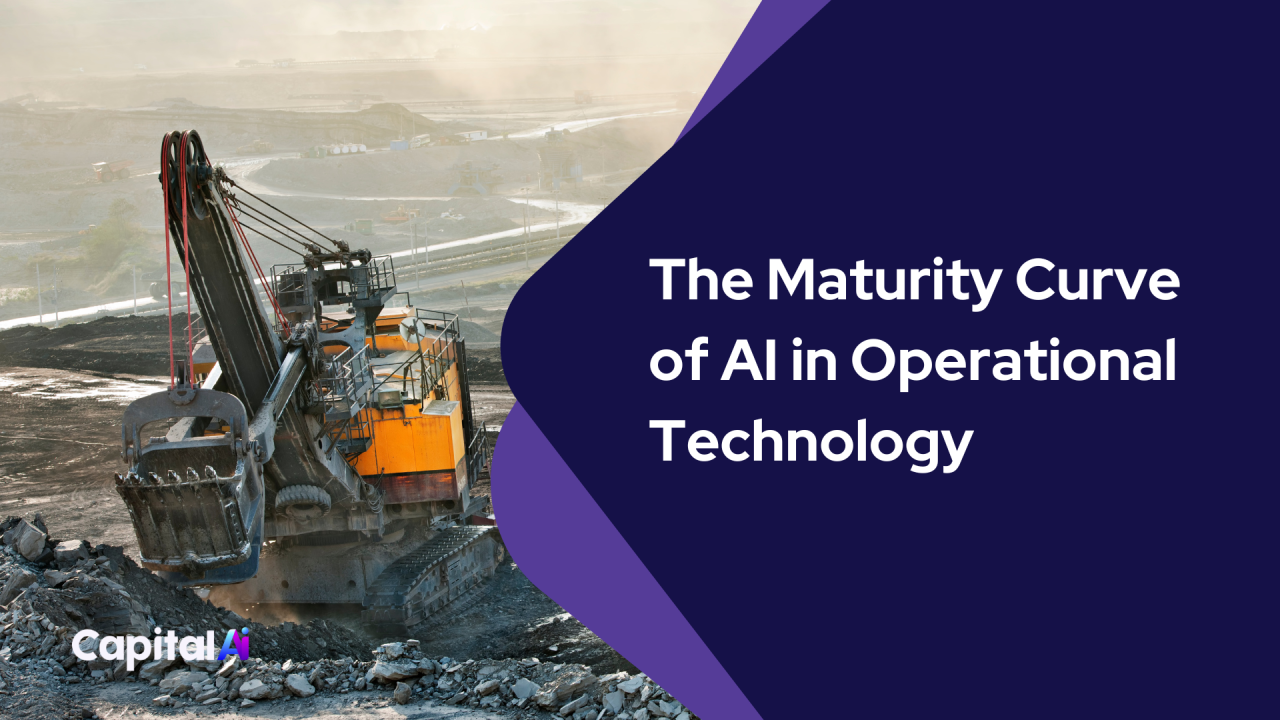
AI working in harmony with operational technology (OT), particularly in industrial settings, holds the key to unlocking efficiency, productivity, and innovation. However, as we work with different companies and explore AI maturity across different industries, it becomes evident that the journey is as complex as it is promising.
Each company we’ve assessed has had completely different requirements. However, we’ve found what these companies do have in common, is that their OT environments often have disparate systems, fragmented data silos, and a lack of interoperability.
While these companies might think they’re ready for AI to be integrated straight away, this disjointed nature impedes the seamless flow of data, which is a necessary prerequisite for effective AI implementation (as I discussed in my last post). As a result, the first hurdle in the maturity curve of AI lies in bridging these divides, harmonising data sources, and ensuring accessibility.
It’s still early days, but one of the main issues we’re facing is with the Industrial Internet of Things (IIoT). This is because before we can apply AI to OT, we need to go through the stages of IIoT first. It’s like setting up the groundwork.
So, while we’re focused on AI, it actually makes sense to start with the IIoT piece first.
Industrial IoT, or IIoT, is all about connecting the machines and equipment in industrial settings to gather data from them. This data is essential because, without it, we can’t do anything with AI. It’s the foundation for everything.
So, the journey towards AI maturity involves progressing from having no data at all to having some data, then moving towards leveraging that data with AI, and IIoT development plays a crucial role in between.
Regardless of the AI maturity of a company, the focus on getting the right data and making sure it’s of high quality so that the AI systems can actually make sense of it and provide meaningful insights.
The democratisation of AI
Vendor agnosticism is also a guiding principle in the effort for businesses to incorporate AI into their OT. No matter what systems companies use, like Honeywell, Siemens, or Rockwell, we need to choose solutions that work well with all of them, rather than being tied to just one company’s products.
Being able to collect, combine, and analyse data from different places is also really important for the democratisation of AI. It lets companies use the technology they already have while still being open to new ideas and improvements.
Edge Machine Learning
In the pursuit of AI maturity, using Edge Machine Learning becomes really important. Edge machine learning involves deploying machine learning models directly on edge devices like smartphones, IoT devices, and embedded systems, bypassing the need for centralised servers or cloud infrastructure.
Problems like sending data, delays, and processing data quickly mean we need to change how we do things. By putting AI models closer to where the data comes from, organisations can deal with these problems better. It lets them make quick decisions right where they need to, without delays.
As we reflect on the maturity curve of AI in the OT environment, it’s obvious that the journey is multifaceted, nuanced, and dynamic. The AI journey is different for every business, navigating challenges, embracing opportunities, and evolving with the technological tide. Complexities aside, one truth remains self-evident – AI holds the potential to redefine the OT environment, creating unparalleled efficiency, sustainability, and innovation.
We’re excited to help AI to shape a future that is not just smarter, but also more equitable, sustainable, and prosperous for everyone.